It’s getting late. (makes “serious” face) You’re standing in front of the fridge like it owes you money, and the only plan you’ve got is “carbs, immediately.”
My teenage son says the quickest way to make him leave a room is for me to start “doing a bit” in the kitchen. So naturally, I’m going to open a recipe about high protein red sauce pasta by telling you I’ve got 99 problems but tonight’s dinner ain’t one. (He has already left. Love you, buddy.)
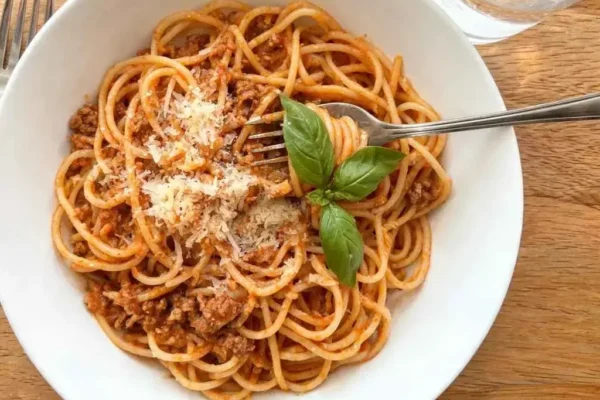
Here’s the short version, because you’re hungry and I respect that: this high protein red sauce pasta is a creamy, weeknight-friendly bowl that hides about 35 grams of protein per serving — and no, you can’t taste the “healthy” part. It looks like red sauce pasta. It tastes like red sauce pasta. It just happens to hit your protein goal like it’s got somewhere to be. Whether you’re chasing gains at the gym or just trying to keep a kitchen full of kids fed until Thursday, this one pulls its weight.
Why This Creamy Red Pasta Sauce Works
Most “healthy pasta” recipes fail for one boring reason: they taste like a compromise. You take one bite and your brain files it under food I am eating on purpose to be good, which is the culinary equivalent of a participation trophy.
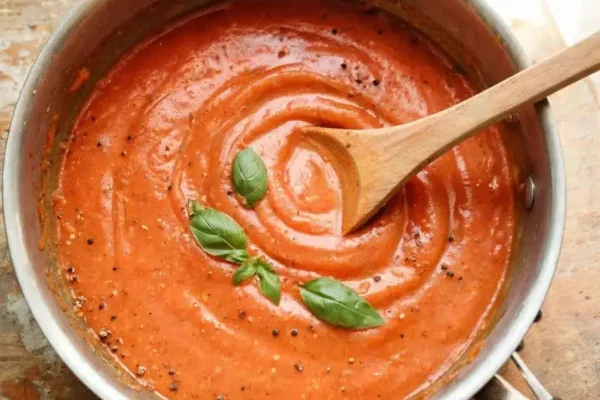
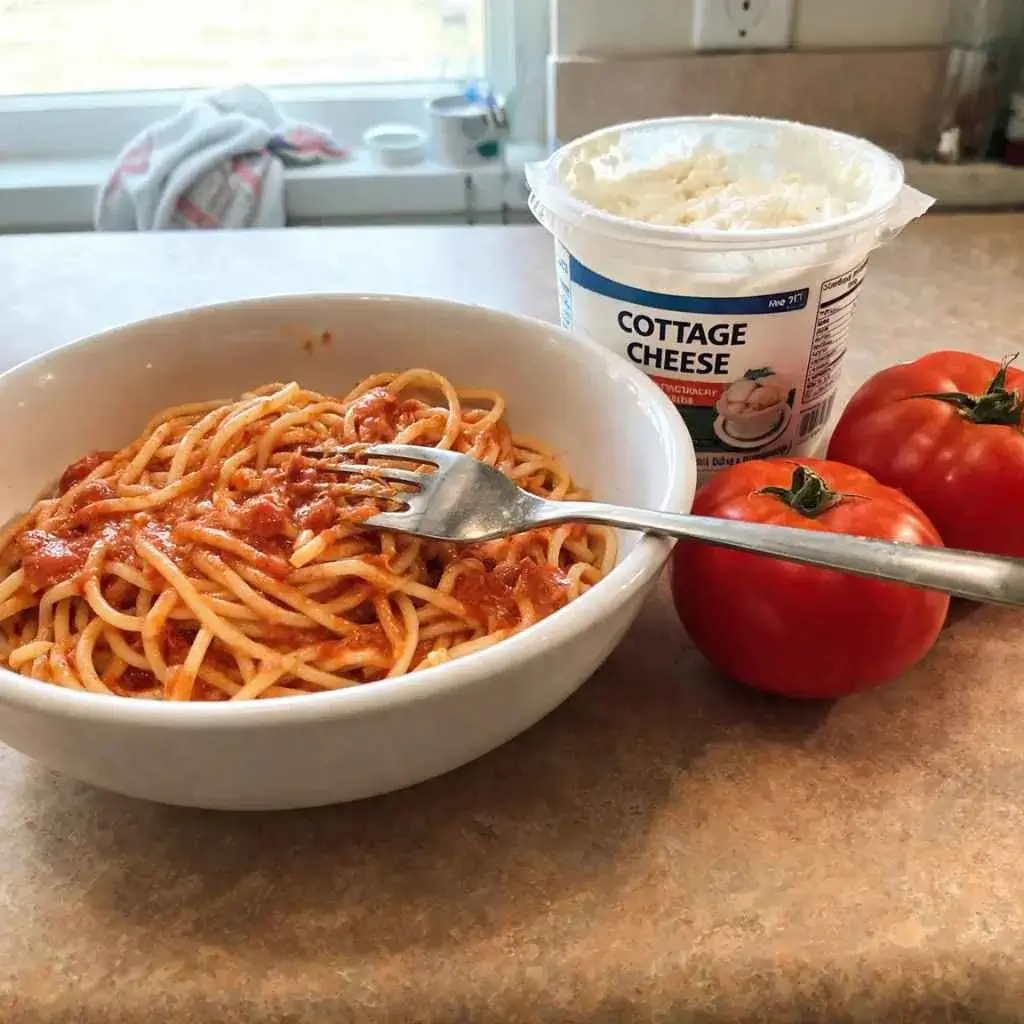
What makes this high protein red sauce pasta different is a single sneaky move — you blend cottage cheese completely smooth and stir it into the tomatoes. That gives you a creamy red pasta sauce with the blush-pink, spoon-coating richness of a vodka sauce, minus the heavy cream and plus a serious protein bump. It’s the same trick a lot of great blush sauces lean on; I just refuse to let anyone taste the cottage cheese. Blend it until it’s silk, and it disappears completely.
Then we stack protein in two more places — the pasta and a lean add-in — so the whole bowl adds up instead of relying on one hero ingredient to do all the work. More on that in a second (I promise it’s easier than it sounds).
The Sad-Can-of-Tomatoes Origin Story
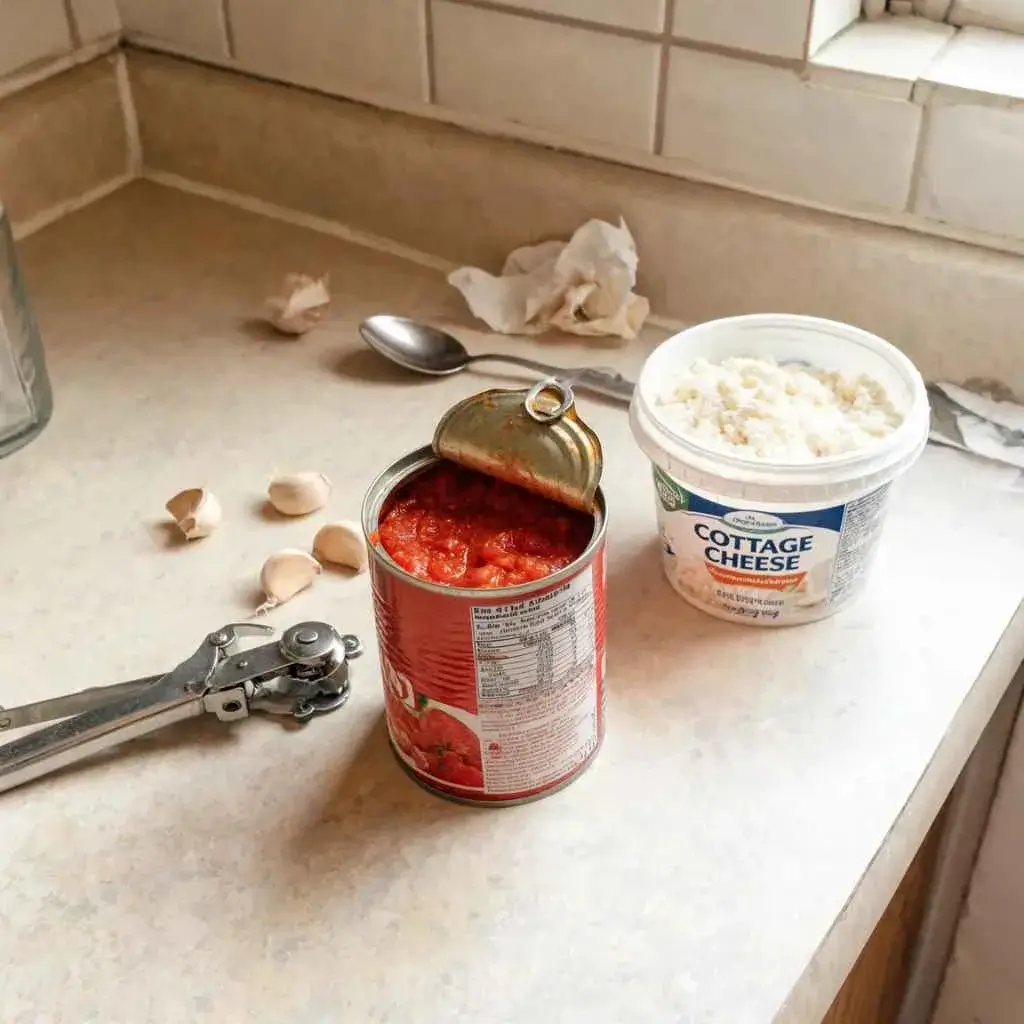
I didn’t set out to reinvent dinner. I set out to use up one lonely can of crushed tomatoes and feed a kitchen full of kids who treat my pantry like a vending machine that never charges them.
I had a tub of cottage cheese I’d bought with big “I’ll be so healthy this week” energy and zero follow-through. On a whim, I blended it into the tomato sauce to make it creamy, tossed it with pasta, and braced for complaints.
They came back for seconds. Then their friends came back for seconds. Then someone I’m not related to asked if there was more. That’s when I knew I had something special — and, more importantly, that even my picky family can’t tell the difference. If you’ve read any of my protein baking rants, you know that’s the highest bar I’ve got.
Where the Protein Actually Comes From
People always want the receipts, so here they are. This high protein red sauce pasta hits its number by layering protein in three easy spots instead of dumping a scoop of chalky powder on top and hoping:
- Protein pasta — chickpea, red lentil, or edamame pasta brings roughly 15–25g per serving before you’ve added a single thing.
- Blended cottage cheese — a cup melts into the creamy red pasta sauce and adds around 24g of protein across the batch (plus that dreamy texture).
- A lean add-in — ground chicken, ground turkey, chicken sausage, or white beans for a meat-free bowl.
Stack all three and you’re comfortably in “that kept me full for hours” territory. Skip the meat and use regular pasta, and you’ve still got a red sauce pasta recipe that quietly out-proteins the version at your favorite restaurant.
A Quick, Honest Nutrition Chat
Now that you know what you’re in for… we need to have a serious discussion. (Only for a paragraph. Then the jokes come back, I promise.)
Red sauce isn’t just a delivery system for carbs. Cooked tomatoes are one of the best sources of lycopene, an antioxidant your body actually absorbs better when tomatoes are heated and paired with a little fat — which is exactly what happens when you simmer them in olive oil. The Cleveland Clinic notes tomatoes’ antioxidant and heart-health benefits, and cooking them the way you do for pasta sauce is one of the smartest ways to eat them.
On the protein side, cottage cheese is a quietly excellent source — UCLA Health points out it packs more protein per serving than eggs or Greek yogurt. If you want to nerd out on exact numbers for any ingredient, the USDA FoodData Central database is the free, no-nonsense source I keep bookmarked.
Okay. Serious face off. (I may have lost you at “lycopene,” but stay with me — the fun part is next, and it involves dinner.)
High Protein Red Sauce Pasta Recipe
Here’s the whole high protein red sauce pasta recipe, start to finish. It comes together in about 30 minutes, in one pan plus a pot, and the only special equipment is a blender (or an immersion blender, aka the wand of destiny).
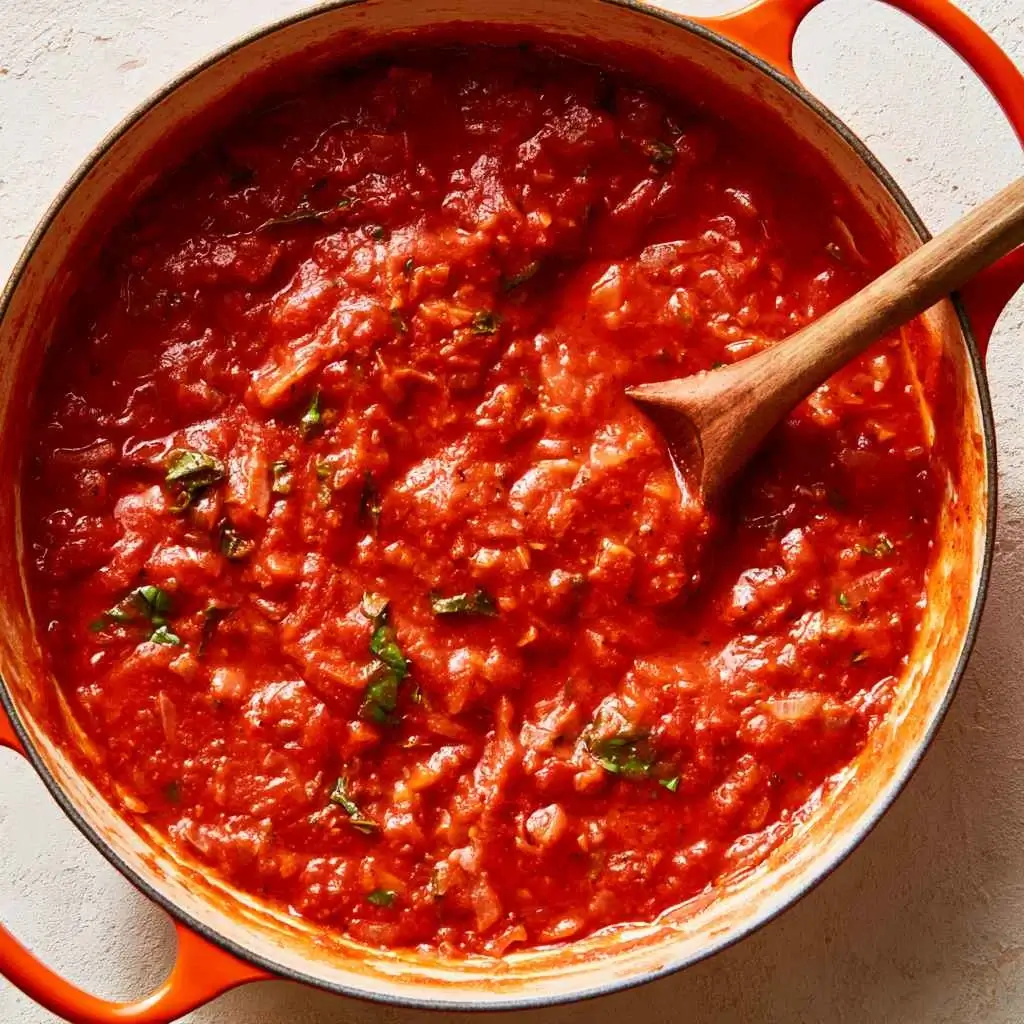

High Protein Red Sauce Pasta: Easy 47g-Protein Recipe
Ingredients
Equipment
Method
- Boil the pasta. Salt the water like the sea, not like a mistake. Cook the protein pasta to al dente, then scoop out 1 cup of pasta water before you drain (future-you will high-five present-you).
- Brown the protein. Heat the olive oil in a big pan and cook the ground chicken or turkey until golden and cooked through, breaking it into little craggy bits. Season, then set aside. (Using beans? Skip ahead — they join at the end.)
- Wake up the aromatics. In the same pan, soften the onion for 3 minutes, add the garlic for 1 more, then stir in the tomato paste and let it “bloom” for a minute until it smells deeper and a little sweet.
- Build the red base. Pour in the crushed tomatoes, oregano, basil, chili flakes, salt, pepper, and that pinch of sugar. Simmer gently for 8–10 minutes so it thickens and stops tasting like a can.
- The magic move. Blend the cottage cheese until it is completely smooth — no lumps, no bumps, no evidence. Turn the heat to LOW, stir the blended cheese into the sauce, and add the Parmesan. Do NOT let it boil (this is the whole ballgame — see the tips).
- Bring it home. Add the pasta and browned protein (or beans) back in. Loosen with pasta water a splash at a time until the creamy red pasta sauce hugs every noodle. Warm through — gently — and finish with basil, more Parm, and black pepper.
Nutrition
Notes
- Dairy-free: Swap the cottage cheese for blended silken tofu and the Parmesan for nutritional yeast. Same creamy sauce, no dairy.
- Pick your pasta: Chickpea holds sauce best, red lentil is softest (great for kids), edamame packs the most protein but tastes noticeably “green.”
- The one rule: Blend the cottage cheese completely smooth and never boil the finished sauce. Smooth cheese is invisible; chunky cheese is a confession.
Tried this recipe?
Let us know how it was!5 Tips So Your High Protein Red Sauce Pasta Works Every Time
1. Blend the cottage cheese like you mean it
This is non-negotiable. Thirty seconds of half-hearted blending leaves you with a sauce full of tiny curds and a family full of questions. Blend a full minute until it’s pourable and glossy. Smooth cottage cheese is invisible; chunky cottage cheese is a confession.
2. Never let the finished sauce boil
Here’s the insider bit nobody tells you: dairy proteins seize and split when they hit a hard boil, and that’s why sad, grainy sauces happen. Add the blended cheese off the boil, keep the heat low, and your creamy red pasta sauce stays velvety. If it ever looks like it’s tightening up, kill the heat and stir in pasta water.
3. Save more pasta water than you think
That starchy, cloudy water is liquid gold — it loosens the sauce and helps it cling. Reserve a full cup even though you’ll probably use half. Pouring it down the drain and then wishing you hadn’t is a rite of passage you only need to do once.
4. Pick your protein pasta on purpose
Chickpea pasta holds sauce best and tastes closest to the real thing. Red lentil is softer and great for younger kids. Edamame packs the most protein but tastes noticeably “green,” so save it for when the sauce is doing heavy lifting. Cook these a minute shy of the box — they go from perfect to mush faster than regular pasta.
5. Season in layers, taste at the end
Salt the pasta water, salt the meat, salt the sauce — a little at each stage. Cottage cheese and Parmesan both bring salt of their own, so do your final taste after everything’s combined. A last squeeze of acidity or pinch of chili is often all it needs to go from “nice” to “wait, who made this?”
Make It Yours
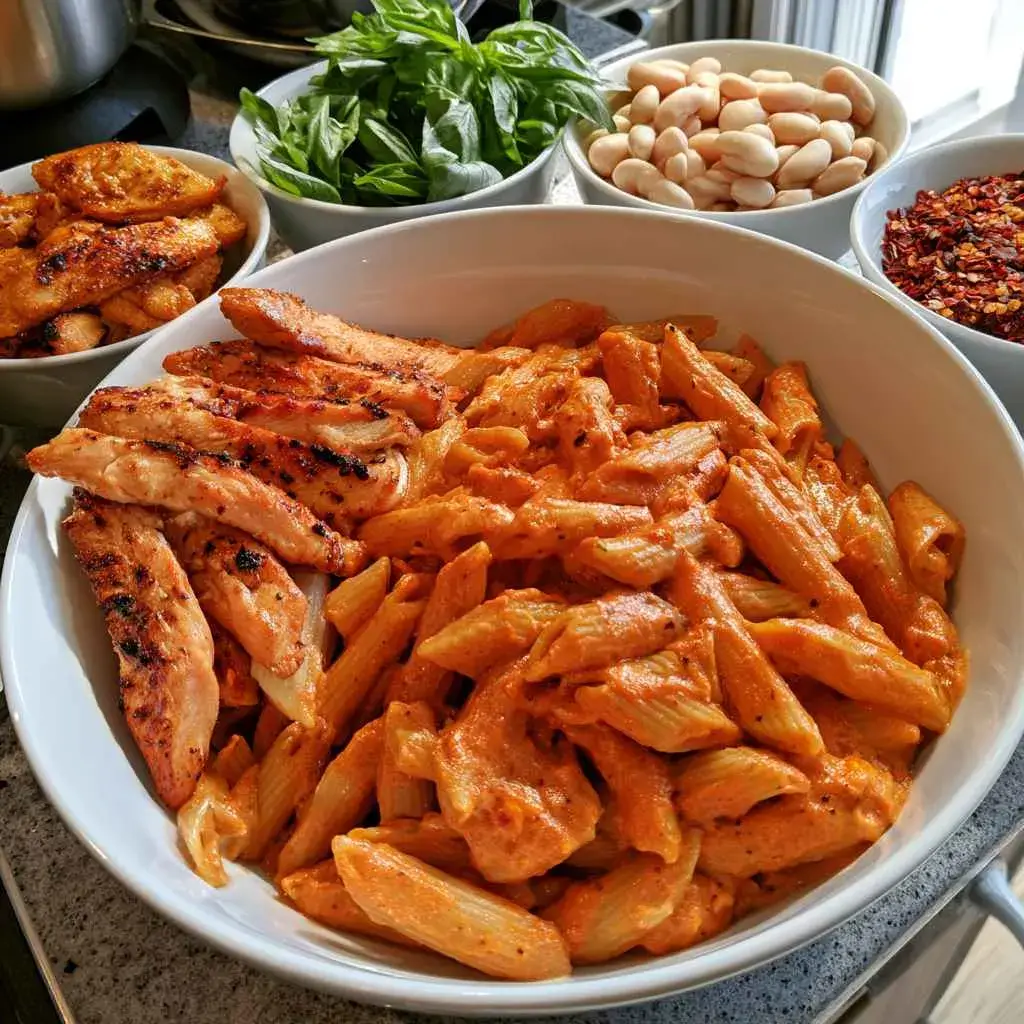
This high protein red sauce pasta is more of a chassis than a rulebook. A few ways I riff on this red sauce pasta recipe:
- Dairy-free: swap cottage cheese for blended silken tofu and the Parm for nutritional yeast. Same creamy red pasta sauce, zero dairy, protein still high.
- Extra veggie: blend a roasted red pepper or a handful of spinach right into the sauce. Nobody sees it coming.
- Spicy: lean into Calabrian chili or a bigger pinch of flakes. Humor and heat are both best sprinkled, not slathered — like Frank’s Red Hot, you don’t put it on everything.
- Meal-prep hero: double the sauce and stash half. It keeps 4–5 days and reheats like a champ with a splash of milk.
More High Protein Recipes
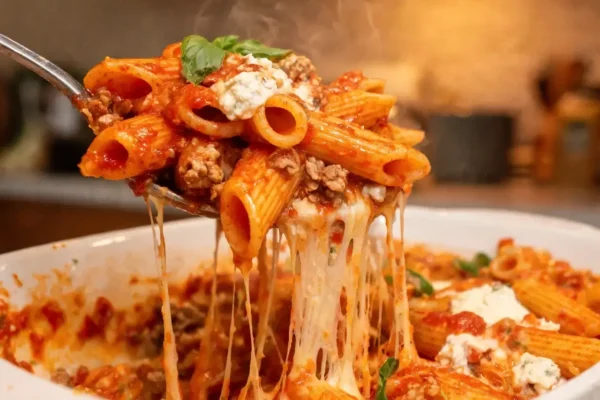
- Protein Penne Pasta (Easy Baked, 40g Protein)
- High Protein Spaghetti Recipe
- High Protein Pasta Sauce
- High Protein Pasta (Creamy, 45g, and Secretly Easy)
High Protein Red Sauce Pasta FAQ
How do I make red sauce pasta high in protein?
Stack protein in three places: use a protein pasta (chickpea, red lentil, or edamame), blend cottage cheese into the tomato sauce, and add a lean protein like ground chicken, turkey, or white beans. Together, those moves take a normal bowl from around 10g to roughly 35g of protein — without changing the flavor you already love.
Can you taste the cottage cheese in the sauce?
No — as long as you blend it completely smooth first. Blended cottage cheese melts into the tomatoes and reads as a creamy, blush-red pasta sauce. My picky family genuinely can’t tell the difference, and they are professional-grade skeptics.
What’s the best protein pasta to use?
Chickpea pasta holds sauce well and brings about 20g of protein per serving with a familiar bite. Red lentil pasta is softer and great for kids, while edamame packs the most protein but tastes noticeably “green.” If you want the sauce to be the star, chickpea is the safest bet.
How much protein is in this high protein red sauce pasta?
Built as written with chickpea pasta, a blended cottage cheese sauce, and ground chicken, each serving lands around 35g of protein. Use regular pasta and skip the meat and you’re closer to 18–20g — still a big upgrade over a standard red sauce pasta recipe.
Why did my creamy red pasta sauce curdle or split?
Heat is almost always the culprit. Dairy proteins seize when they boil, so stir the blended cottage cheese in over low heat and never let the finished sauce reach a rolling boil. A splash of pasta water plus a low-and-slow warm-up brings it back together.
Can I make this creamy red pasta sauce dairy-free?
Yes. Swap cottage cheese for silken tofu and Parmesan for nutritional yeast or a dairy-free Parm. Blended silken tofu gives you the same velvety, creamy red pasta sauce and keeps the protein high without any dairy.
How long does it keep, and can I meal prep it?
It keeps in an airtight container in the fridge for 4–5 days and reheats beautifully with a splash of milk or broth. Warm it gently over low heat or in short microwave bursts so the creamy sauce stays smooth instead of splitting.
The Bottom Line
This high protein red sauce pasta is proof that “good for you” and “good, actually” don’t have to be at war. It’s creamy, it’s fast, it’s the rare dinner that makes both the person tracking macros and the eleven-year-old who “hates everything” happy at the same table. That’s the dream, and it’s a Tuesday.
Make it once as written, then start bending it to your kitchen. Blend in a veggie, dial the heat, swap the protein — this red sauce pasta recipe is built to take a joke. And if your first batch splits a little? Jokes bomb, sauces split, we try again. That’s just cooking.
Ain’t no dinner like a Joy Youell dinner, because a Joy Youell dinner has 35 grams of protein and doesn’t stop. (My son has left the room again. Worth it.)