It’s 6:47 in the morning. You’re standing in front of the fridge with a gym bag on one shoulder, a laptop bag on the other, and a kid behind you asking — for the third time — where his other shoe is.
Here’s the direct answer to why you’re here: high protein blueberry muffins are just regular blueberry muffins where cottage cheese, Greek yogurt, eggs, and (optionally) protein powder replace some of the flour and fat. This recipe makes twelve of them with about 11 grams of protein each without protein powder, or about 14 grams with. They taste like the muffin case at a good bakery. That’s the whole pitch.
I’ve got 99 problems, but breakfast ain’t one. (I’m not apologizing for that. My fourteen-year-old is going to read this and want to walk into the sea, and that makes my feel goods go wild.)
Now — before we get into it, I need to tell you the thing that took me nineteen batches to figure out.
Why most high protein blueberry muffins go wrong
Protein powder is not Frank’s Red Hot. You do not put that stuff on everything.
That’s the whole problem with 90% of the high protein blueberry muffins on the internet. Somebody takes a muffin recipe, dumps in two scoops, and publishes it. Then you bake it and pull out twelve small rubber pucks that smell faintly of vanilla and regret.
Protein powder is thirsty. It grabs liquid out of the batter and holds onto it, and unlike flour it brings no starch and no gluten to the party — so there’s nothing holding structure once the water’s gone. Push past a certain ratio and you don’t get a muffin. You get a protein bar with a muffin’s job description.
I consider myself an expert at sneaking protein into baked goods. I say that plainly because it’s true and because hedging is boring. I wrote a whole cookbook of high-protein desserts. And it still took me nineteen batches of these to get the crumb right.
Writing recipes is like throwing darts, honestly. When you start out you’re just happy to hit the board. Batch one hit the board. Batch one was also, and I want to be precise here, a muffin-shaped sponge.
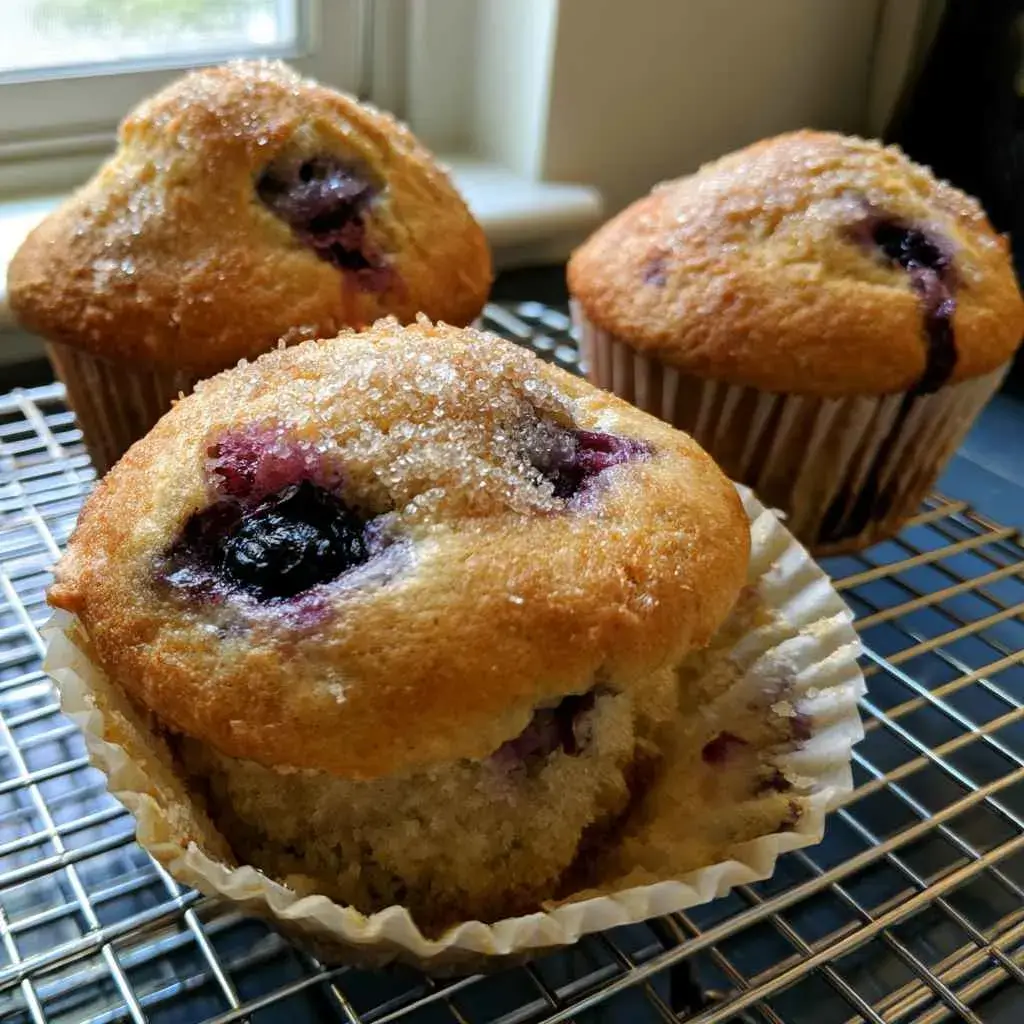

High Protein Blueberry Muffins (13g Protein)
Ingredients
Equipment
Method
- Heat the oven to 425°F (220°C) and line a 12-cup muffin tin. Yes, 425 — it comes back down. This is the single biggest reason these dome instead of spreading.
- Blend the cottage cheese for a full 45 seconds until completely smooth, with no visible curds. Scrape the sides halfway through. If you can still see white specks, keep going.
- Whisk the flour, flaxseed, dry milk powder, baking powder, baking soda and salt in a large bowl. If you’re using protein powder, sift it in here and remove 1/3 cup of the flour.
- Whisk the blended cottage cheese, Greek yogurt, eggs, maple syrup, oil, vanilla and lemon zest in a second bowl until smooth. It should look like a thick pancake batter.
- Toss the blueberries with 1 tablespoon of flour in a small bowl. Don’t skip this — it’s what keeps them off the bottom.
- Pour the wet into the dry and fold gently until no dry streaks remain. Lumps are fine. Lumps are GOOD. The moment it looks perfectly smooth you’ve overworked it.
- Fold in the floured blueberries with about four strokes.
- Let the batter rest 10 minutes. The flour hydrates, the baking powder starts its first reaction, and the batter thickens enough to hold the berries in place.
- Fill the muffin cups all the way to the top — properly full, almost mounded. Sprinkle the coarse sugar over the tops.
- Bake at 425°F for 6 minutes, then reduce the oven to 350°F (175°C) without opening the door and bake another 14 to 17 minutes.
- Check the center with an instant-read thermometer: 200–210°F means done. A toothpick works too, but the thermometer is why you’ll stop underbaking these.
- Cool in the pan for 10 minutes, then on a wire rack for 20 minutes more. The centers finish setting as they cool. Twenty minutes.
Nutrition
Notes
- No protein powder (as written) — cottage cheese, Greek yogurt and eggs do the work. ~11 g protein per muffin.
- With protein powder — remove 1/3 cup (40 g) of the flour, add 1/3 cup (35 g) of protein powder. ~13 g protein per muffin.
- Greek yogurt only — use 2 cups (395 g) plain Greek yogurt in place of both the cottage cheese and the yogurt. ~10 g protein.
- Cottage cheese only — use 2 cups (450 g) blended cottage cheese in place of both. ~11 g protein.
Tried this recipe?
Let us know how it was!4 ways to make high protein blueberry muffins
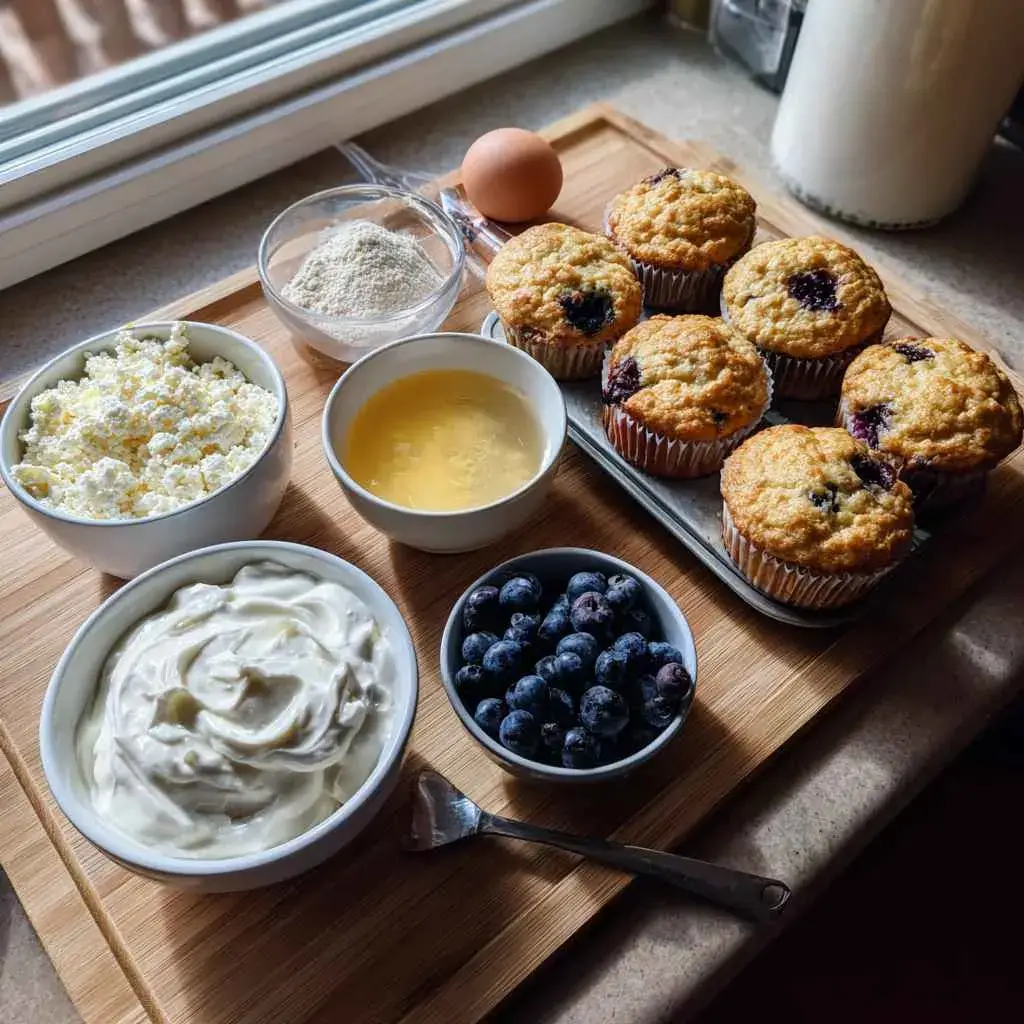
Here’s what nobody else does, and it drove me nuts as a reader before it drove me to fix it. Every other high protein blueberry muffin recipe assumes you have exactly the ingredient the author likes. You don’t have protein powder. Or you have protein powder and no cottage cheese. Or you have a tub of Greek yogurt and a deadline.
One base batter. Four routes. Same bake time, same pan, same everything.
| Route | What’s in it | Swap from the base | Protein per muffin* |
|---|---|---|---|
| 1. No protein powder (the default) | Cottage cheese + Greek yogurt + eggs | Nothing — make it as written | ~11 g |
| 2. With protein powder | Base + a scoop | Replace ⅓ cup (40 g) of the flour with ⅓ cup (35 g) protein powder | ~14 g |
| 3. Greek yogurt only | No cottage cheese in the house | Use 2 cups (395 g) Greek yogurt total, skip the cottage cheese | ~11 g |
| 4. Cottage cheese only | No yogurt in the house | Use 2 cups (450 g) blended cottage cheese, skip the yogurt | ~12 g |
So if you came here looking for blueberry protein muffins without protein powder, that’s Route 1 and you don’t have to change a thing. If you came looking for blueberry muffins with protein powder, that’s Route 2 and it’s one swap. If you came here because you bought a giant tub of cottage cheese at Costco and have been staring at it since Tuesday — Route 4, my friend. Route 4.
How to add protein powder to muffins (the ratio that actually works)
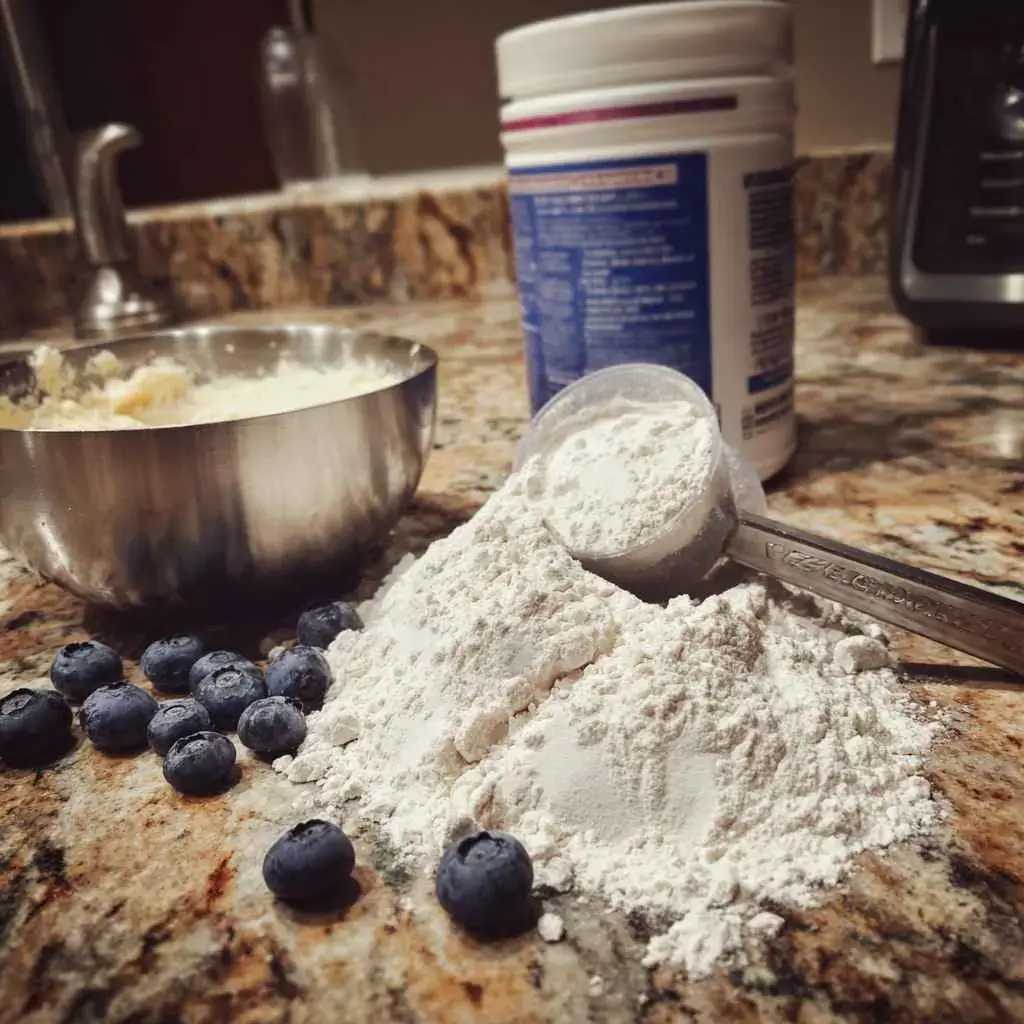
This is the section I wish somebody had written for me in 2019.
The rule: replace no more than ⅓ cup (35 g) of flour with protein powder in a 12-muffin batch. That’s roughly 15% of the dry weight. Go past it and the crumb tightens up fast.
But which powder you’re holding changes things more than the internet admits. This table cost me six batches:
| Powder type | Extra liquid needed | Max flour swap | What the crumb does |
|---|---|---|---|
| Whey concentrate | None | ⅓ cup (35 g) | Closest to a normal muffin. Start here. |
| Whey isolate | +2 tbsp yogurt or milk | ¼ cup (28 g) | Drier and tighter. Isolate is stripped of fat and lactose, so it has nothing to soften it. |
| Casein or whey/casein blends | +3–4 tbsp liquid | ¼ cup (28 g) | The thirstiest of the lot. Batter stiffens on standing — scoop it right away. |
| Plant protein (pea, rice, blends) | +3 tbsp liquid | ¼ cup (28 g) | Grainier, and it will go gummy if you push it. Sift it and let the batter rest 10 minutes. |
| Collagen peptides | None | 2 tbsp | Brings zero structure. Treat it as a small top-up, not a flour replacement. |
Two more things nobody tells you.
Flavored powder is a flavor ingredient. Vanilla and unflavored are safest with blueberry. Cinnamon works. Chocolate technically works but you’ve now made a different muffin, and that’s a choice you should make on purpose.
Sweetened powder means less sweetener. Most flavored powders are already sweetened. If yours is, drop the maple syrup to ¼ cup or the muffins tip over into cloying.
And if you’re just here wondering can you add protein powder to a boxed muffin mix — yes, same rule. One standard box of mix takes about ¼ cup of powder plus 2 extra tablespoons of liquid. Any more and you’re back to rubber pucks.
Ingredients and what each one is doing
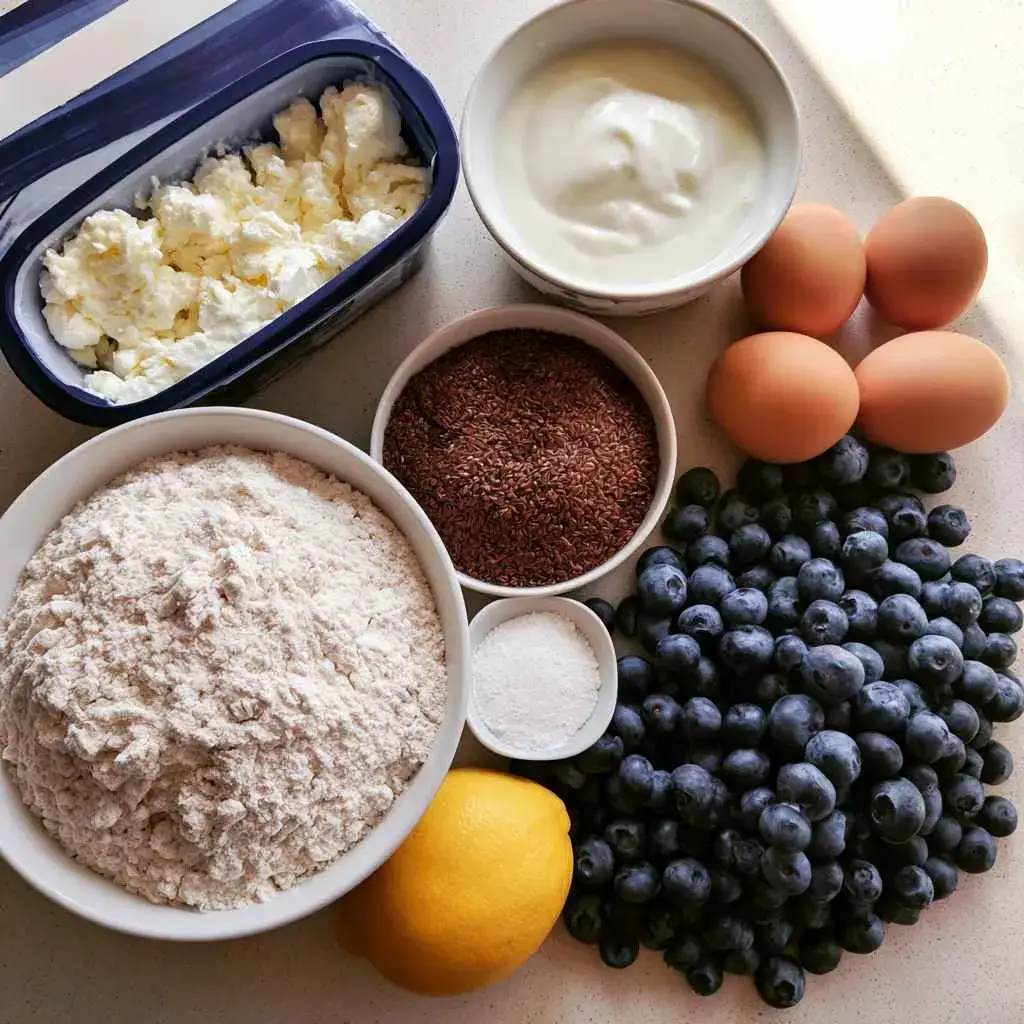
- All-purpose flour — the structure. A 1:1 gluten-free blend works; oat flour works for up to half. Whole wheat works for up to half and no further, unless you like your muffins with a bit of gravitational pull.
- Cottage cheese — blended until completely smooth, it disappears. It’s the reason these are moist without a stick of butter. Small curd, full-fat or low-fat, doesn’t matter.
- Greek yogurt — acidity, which reacts with the baking soda and gives you lift, plus a tang that keeps the crumb from tasting flat.
- Eggs — four of them. Structure, lift, and the thing that lets you skip protein powder entirely.
- Ground flaxseed — nutty flavor and it makes these high fiber high protein muffins without anybody noticing. Hemp hearts or ground chia sub 1:1.
- Nonfat dry milk powder — my secret weapon, and a genuinely old bakery trick. It deepens browning and adds protein without adding water. A quarter cup does a lot.
- Maple syrup or honey — start at ⅓ cup. These are not dessert-sweet at ⅓ cup. Go to ½ cup if you want them closer to bakery-case territory.
- Neutral oil — avocado or canola. Oil stays liquid at fridge temperature, which is why these don’t turn to stone in the cold. Melted butter tastes better but firms up. Half and half is a nice compromise.
- Blueberries — fresh or frozen, wild if you can find them.
- Lemon zest + coarse sugar — the topping is optional in the way that a seatbelt is optional.
How to get tall, bakery-style muffin tops
Three things make a dome. That’s it. Everything else is decoration.
Heat, hard and early. Starting at 425°F gives you fast oven spring — the leaveners fire, the batter shoots up, and the outside sets before it can spread sideways. Then you drop the temperature so the middle can catch up without the top burning. Every bakery muffin you’ve ever loved was made this way.
Fill the cups to the top. Not two-thirds. Not “¾ full” like the back of the box says. All the way. There isn’t enough batter volume in a two-thirds fill to build a crown, and this batter is thick enough that it won’t run over.
Thick batter. That’s what the ten-minute rest buys you. Thin batter spreads out, thick batter climbs up.
If you want to go one step further: parchment tulip liners give the batter walls to climb, and they make homemade muffins look like you bought them. Cheap trick, works every time.
Fresh vs frozen blueberries (and how to stop them sinking)
Half the internet says thaw your frozen berries. The other half says never thaw them. They’re both confidently telling you the opposite thing, so let me settle it.
Use them frozen, straight from the bag, and don’t thaw. Thawed berries leak, and that juice does two things you don’t want: it bleeds purple-grey streaks through the crumb, and it thins the batter right where the berry is sitting, which is exactly how you get a soggy pocket.
Fresh berries are fine too — no advantage either way in the finished muffin, so buy whichever is cheaper.
Wild blueberries are the upgrade. They’re smaller, so they distribute better and sink less, and they carry more flavor per berry. They’re usually only sold frozen, which works out nicely.
Why the flour toss works: a thin coat of flour absorbs the surface moisture on the berry and gives the surrounding batter something to grip. It doesn’t defy physics — it just adds enough friction that the berry stays suspended while the batter is setting. Combine it with the ten-minute rest and berry-sinking basically stops being a problem.
Tips for perfect high protein blueberry muffins every time
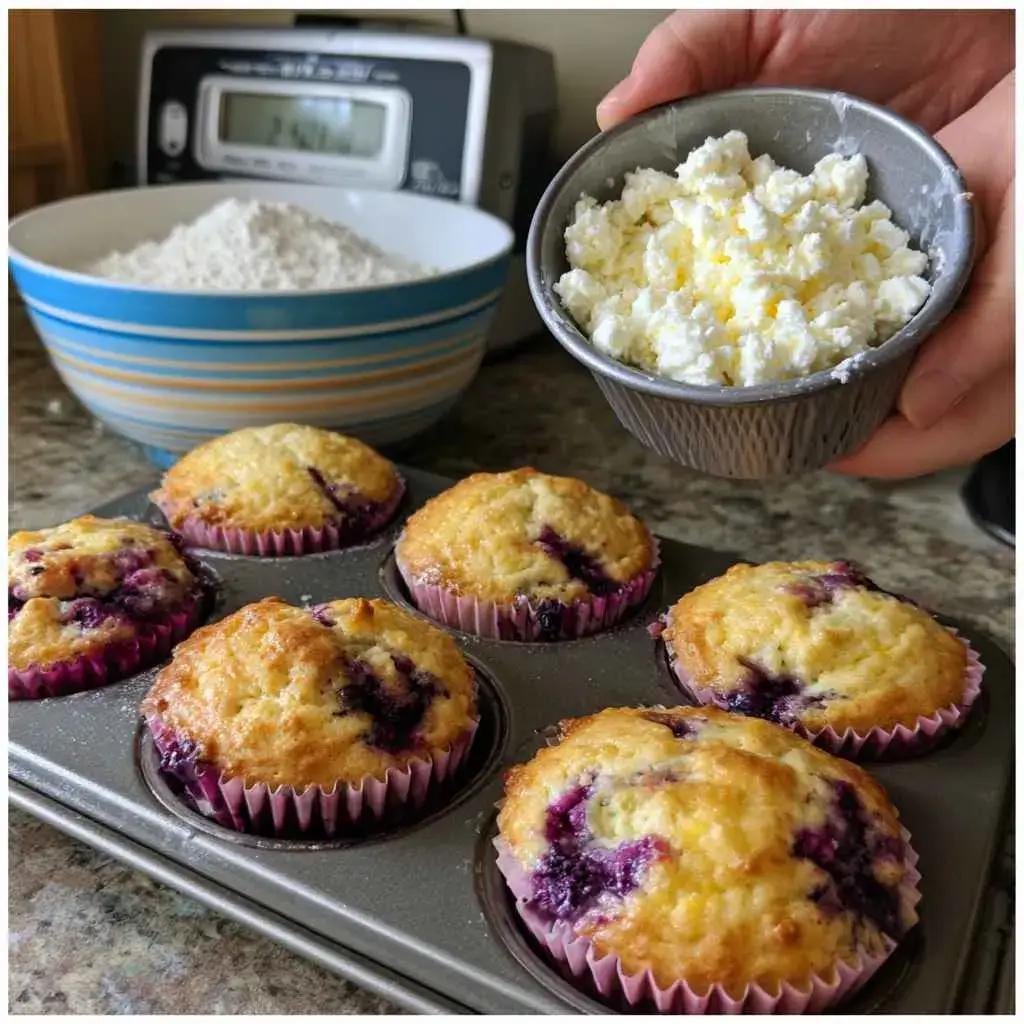
These are the five things that separate good high protein blueberry muffins from great ones.
Weigh your flour if you possibly can. This is the number one reason recipes “don’t work.” A cup of flour can be anywhere from 120 g to 155 g depending on how you scoop, and that’s a swing of nearly a full extra cup across this recipe. Every ingredient here has a gram weight next to it for exactly this reason. If you’re scooping with a cup, fluff the flour first, spoon it in, and level it off — don’t pack the cup into the bag.
Room temperature eggs, genuinely. Cold eggs seize the oil into little specks and you get a broken-looking batter that bakes unevenly. Five minutes in a bowl of warm tap water and you’re done. This matters more in a batter this dairy-heavy than it does in a standard muffin.
Blend the cottage cheese longer than you think. Every single complaint I’ve ever seen about “weird white lumps” in cottage cheese muffins traces back to under-blending. Forty-five seconds minimum, and scrape the sides down halfway through.
Buy a $12 instant-read thermometer. 200–210°F in the center and you’re done, every time, regardless of your oven’s mood that day. The toothpick test can’t tell the difference between wet batter and a burst blueberry, which is how perfectly good muffins get baked into dryness by people trying to be careful.
Make a double batch and freeze half. These freeze better than almost anything else I bake, and a batch of protein muffins in the freezer is the difference between eating breakfast and not eating breakfast. Reheat times are below.
Troubleshooting: why your high protein blueberry muffins didn’t work
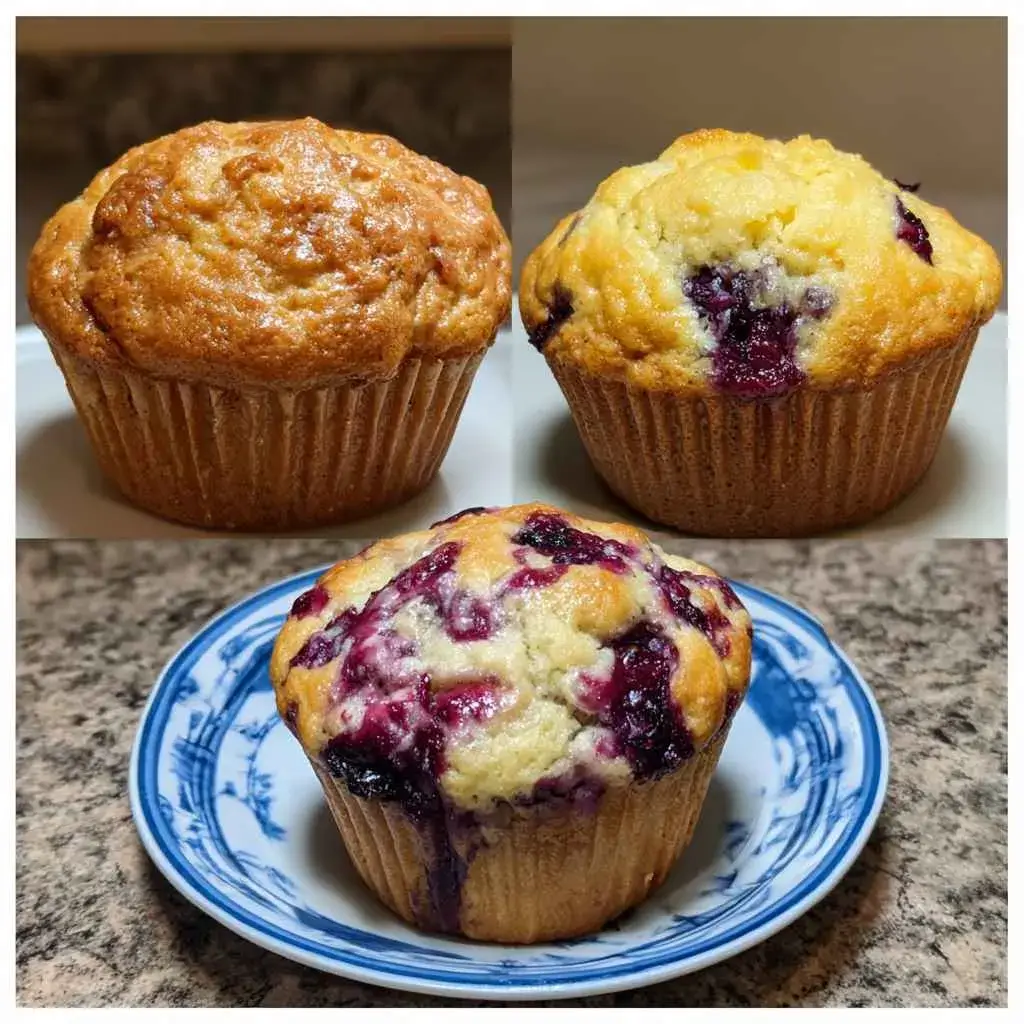
Okay. (makes “serious” face) Serious section. This is where I’ve made every mistake so you don’t have to.
Dense and heavy. You overmixed, or your baking powder is old. Fold until the dry streaks vanish and then put the spatula down. Test old baking powder in a splash of hot water — if it doesn’t fizz hard, it’s done.
Gummy or glue-like. Too much protein powder, almost always. Or a plant-based powder used at a whey ratio. Drop back to ¼ cup and add 3 tablespoons of liquid.
Rubbery. The combination punch: too much powder AND overbaked. Fix the ratio first, then the thermometer.
Dry. Isolate or casein used without the extra liquid, or an oven running hot. Ovens lie. A $10 oven thermometer will tell you by how much.
Sunken middle. Underbaked, or somebody opened the oven during the first 15 minutes. (It was me. It’s always me.) The rush of cool air collapses the structure before it’s set.
Flat tops, no dome. Didn’t start at 425°F, or the cups weren’t filled full enough, or the batter didn’t rest. Usually all three.
Berries all sank to the bottom. No flour toss, thawed frozen berries, or no rest.
Stuck to the liners. Low-fat batters stick to cheap paper liners — that’s chemistry, not your fault. Use parchment or tulip liners, or grease the liners lightly. Also: they release much better once fully cool.
Mini, jumbo, and loaf conversions
Same batter. Different pan. Here’s what changes.
| Pan | Fill level | Temp | Time | Yield |
|---|---|---|---|---|
| Standard 12-cup | To the top | 425°F for 6 min, then 350°F | 14–17 min after the drop | 12 muffins |
| Mini, 24-cup | ¾ full | 375°F, no drop | 11–13 min | ~24 minis |
| Jumbo, 6-cup | ¾ full | 425°F for 6 min, then 350°F | 22–26 min after the drop | 6 jumbos |
| 9×5 loaf pan | ¾ full | 350°F, no blast | 50–60 min, tent with foil at 40 | 1 loaf |
Minis are the move if you’re feeding kids, and they’re the only version of this recipe my friend’s six-year-old will accept, for reasons known only to him.
Baking these at high altitude
If you’re above about 3,500 feet, four small changes:
- Cut the baking powder to 2 teaspoons.
- Cut the maple syrup by 1 tablespoon.
- Add 2 tablespoons of extra liquid (milk or yogurt).
- Raise the oven 15–25°F for both stages.
Lower air pressure means gases expand faster, so batters rise hard and then collapse before the structure sets. Less leavening, less sugar, more liquid, hotter oven. Colorado State University Extension publishes detailed adjustment charts by elevation if you’re well above 5,000 feet and want to dial it in properly.
How to store and freeze high protein blueberry muffins
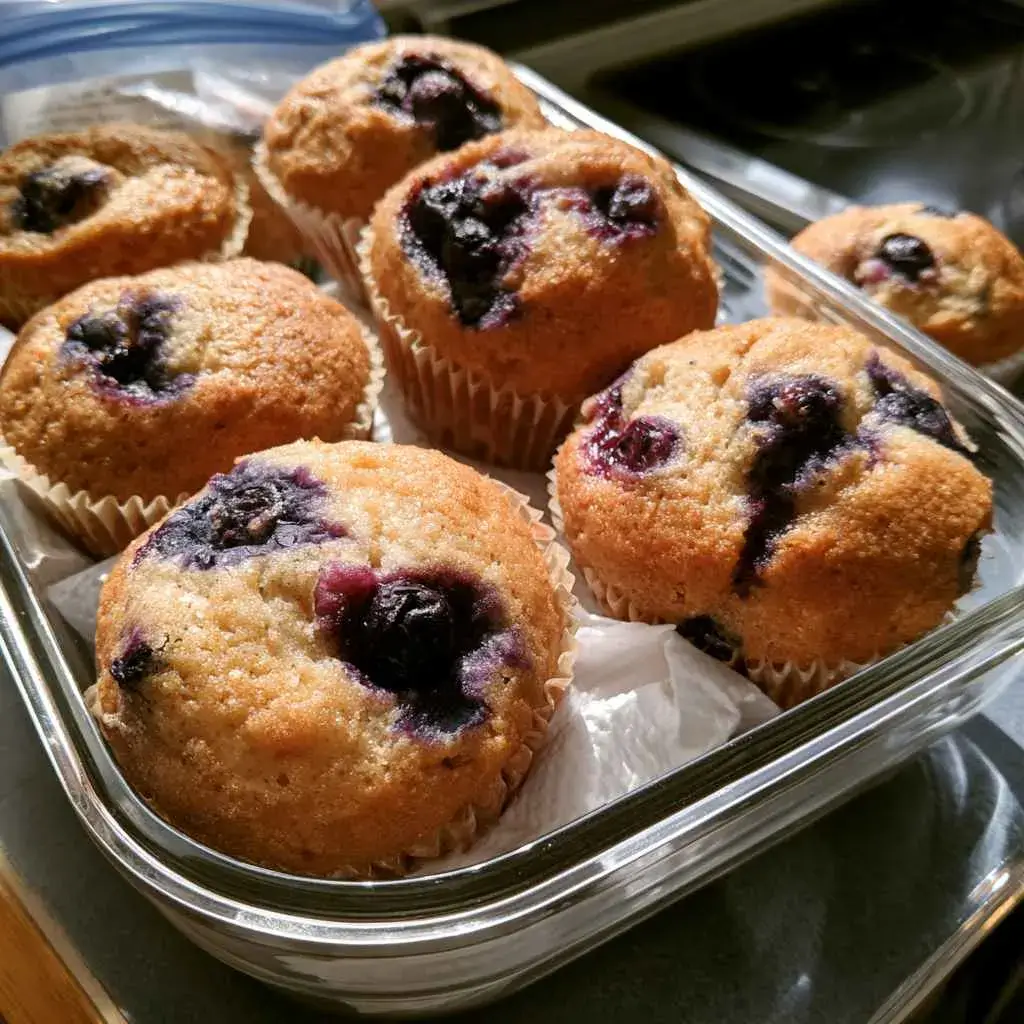
High protein blueberry muffins keep better than almost anything else I bake. Here’s the full breakdown.
Room temperature: 3 days in an airtight container. Lay a paper towel under and over them — it absorbs the moisture that would otherwise make the tops tacky.
Fridge: up to 6 days. The crumb tightens up in the cold because the fats firm, which is why some people say don’t refrigerate these. You don’t have to accept that — just pull one out 20 minutes before you eat it, or microwave it for 12 seconds and it comes right back.
Freezer: 3 months. Cool completely, then freeze on a tray for an hour before bagging so they don’t fuse into a muffin brick.
Reheating, with actual numbers:
- From frozen, microwave: 35–45 seconds
- From frozen, oven: 8–10 minutes at 300°F (this one re-crisps the top)
- From the fridge: 12–15 seconds
- From the freezer to a lunch bag: just put it in there frozen at 7am. It’ll be perfect by noon.
Batter ahead of time? No. Once the baking powder is wet the clock’s running. Mix the dry ingredients the night before and store them in the bowl — that’s the make-ahead that actually helps.
Nutrition for High-Protein Blueberry Muffins, by Route
Numbers first, because you asked, and because nobody else on page one of Google will just tell you.
| Per muffin | Route 1 (no powder) | Route 2 (with powder) | Route 3 (yogurt only) | Route 4 (cottage cheese only) |
|---|---|---|---|---|
| Calories | ~245 | ~245 | ~240 | ~250 |
| Protein | ~11 g | ~14 g | ~11 g | ~12 g |
| Carbohydrates | ~31 g | ~28 g | ~31 g | ~30 g |
| Fat | ~9 g | ~9 g | ~8 g | ~10 g |
| Fiber | ~2 g | ~2 g | ~2 g | ~2 g |
| Sugar | ~10 g | ~10 g | ~10 g | ~10 g |
How these were calculated: ingredient weights entered into a standard nutrition database, divided by 12 muffins, using low-fat cottage cheese, nonfat plain Greek yogurt, large eggs, and unflavored whey concentrate for Route 2. Values will shift with your brands, your berry volume, and how full you fill the cups. Treat every number above as an estimate, not a lab result. If you want to check the underlying ingredient data yourself, USDA FoodData Central is the source everybody’s calculator is pulling from anyway.
For comparison: a standard bakery-style blueberry muffin of similar size runs roughly 5–6 g of protein. That’s the honest answer to how much protein is in a blueberry muffin, and it’s why this recipe exists.
Flavor variations
The base batter is a platform. Go nuts, within reason.
- Lemon blueberry — double the zest and add 1 tbsp lemon juice. My personal favorite and it’s not close.
- Blueberry streusel — ½ cup flour, ¼ cup coconut sugar, ½ tsp cinnamon, 3 tbsp cold butter, cut together and piled on before baking.
- Orange cranberry — swap the blueberries for cranberries, the lemon zest for orange. Christmas in a tin.
- Chocolate chip — swap the berries for ¾ cup dark chocolate chips. This is what happens in my house when someone forgets to buy blueberries.
- Mixed berry — frozen mixed berries work, but chop the big blackberries or they sink.
- Lower-carb version — replace ¾ cup of the flour with almond flour and 2 tbsp coconut flour, and add 2 tbsp extra liquid. Denser, still good, and it’s the closest this batter gets to a low carb protein muffin.
- Extra fiber — swap the flaxseed for hemp hearts and add 2 tbsp ground chia.
High Protein Blueberry Muffins FAQs
How much protein is in these high protein blueberry muffins?
About 11 grams per muffin made as written, and about 14 grams if you use the protein powder route. That’s roughly double a standard bakery-style blueberry muffin, which lands around 5–6 grams. All figures are calculated estimates and will vary with your brands.
Can you make protein blueberry muffins without protein powder?
Yes — that’s the default version of this recipe. The protein comes from cottage cheese, Greek yogurt, four eggs, ground flaxseed, and dry milk powder instead. No powder needed, and no protein powder aftertaste either.
How much protein powder can I add to muffins?
Replace no more than ⅓ cup (35 g) of flour with protein powder in a 12-muffin batch — about 15% of the dry weight. Whey isolate, casein, and plant proteins should be capped at ¼ cup and need 2–4 tablespoons of extra liquid.
Why are my protein muffins dense or gummy?
Almost always too much protein powder, or overmixing. Protein powder absorbs liquid without providing starch or gluten, so past a certain ratio the crumb tightens into something rubbery. Cut back to ¼ cup, add liquid, and fold only until the dry streaks disappear.
Can I use plant-based protein powder?
Yes, with adjustments. Pea and rice proteins are grainier and thirstier than whey — cap them at ¼ cup, sift them in, add 3 tablespoons of extra liquid, and let the batter rest 10 minutes so it hydrates fully.
Do I have to blend the cottage cheese?
For a smooth, bakery-style crumb, yes. Unblended curds don’t melt into the batter and leave white specks. Blend for a full 45 seconds until there’s no visible texture at all — this is the single most common failure point in cottage cheese blueberry muffins.
Can I use Greek yogurt instead of cottage cheese?
Yes. Use 2 cups (395 g) of plain Greek yogurt total in place of both the cottage cheese and the yogurt. The protein lands in the same range and the crumb is very slightly tangier.
Can I use frozen blueberries?
Yes, and don’t thaw them. Frozen berries go straight from the bag into the flour toss and then into the batter. Thawing releases juice, which streaks the crumb grey-purple and creates wet pockets around each berry.
Can I make these gluten-free or egg-free?
Gluten-free: a 1:1 gluten-free baking blend works with no other changes. Egg-free: replace the eggs with 4 flax eggs (4 tbsp ground flaxseed + 10 tbsp water, rested 10 minutes) and add ¼ cup extra cottage cheese — expect a slightly denser, more tender crumb.
How long do they keep, and can I freeze them?
Three days at room temperature, six days refrigerated, three months frozen. Reheat from frozen for 35–45 seconds in the microwave, or 8–10 minutes at 300°F if you want the top crisp again.
More high protein breakfasts to make on a Sunday:
- 5 Easy High Protein Muffins
- Protein Chocolate Chip Muffins
- High Protein Banana Muffins
- High Protein English Muffins
- High Protein Pumpkin Muffins
The Bottom Line
Nineteen batches. One base batter. Four ways to make it depending on what’s actually in your fridge at 6:47 in the morning.
Here’s my honest measure of whether a recipe is finished: my family can’t tell the difference. Not “they said it was nice.” Can’t tell. My fourteen-year-old — the one currently dying of embarrassment somewhere around paragraph three — ate four of these standing at the counter and didn’t ask a single question. His friend asked which bakery they came from. That’s when I knew I had something special.
This recipe was supposed to go in the cookbook. It didn’t make it, because it wasn’t ready and I’d rather ship it right than ship it on time. It’s ready now.
So go make some high protein blueberry muffins. Fill the cups all the way up. Start the oven at 425. Blend the cottage cheese longer than feels necessary. And for the love of everything, let them cool for twenty minutes.
The fact that you read this entire thing, troubleshooting section and all, means you’re my kind of person. Ain’t no party like a muffin party, because a muffin party has a twenty-minute mandatory cooling period.
I may have lost you at the Nickelback thing. I stand by it.